
great expectations
and why we should avoid them

I’m sitting on the floor of my empty Boston apartment. A place that has seen endless versions of me: waking up after thirty hours of studying, hiding out from a freezing blizzard, eating an ice cream sundae the size of my face to celebrate the offer call. I remember the day I stepped into this 350 ft studio thinking I knew exactly what I wanted and where I would go next. I would be packing my bags for New York by now. Living at a research lab seven days a week. A large group of friends, an early acceptance into the PhD program I wanted at Harvard, and a great sense of confidence in everything I did with no exceptions.
I’m really, really… really glad I was wrong.
The last thing I packed before sending one of my boxes was a worn, ten year old copy of Charles Dickens’ Great Expectations that I bought back in ’23 in London. I don’t know if it was intentional or just the universe being a little too precise about things. But there it was, sitting at the bottom of the pile like it had been waiting for me to notice it.
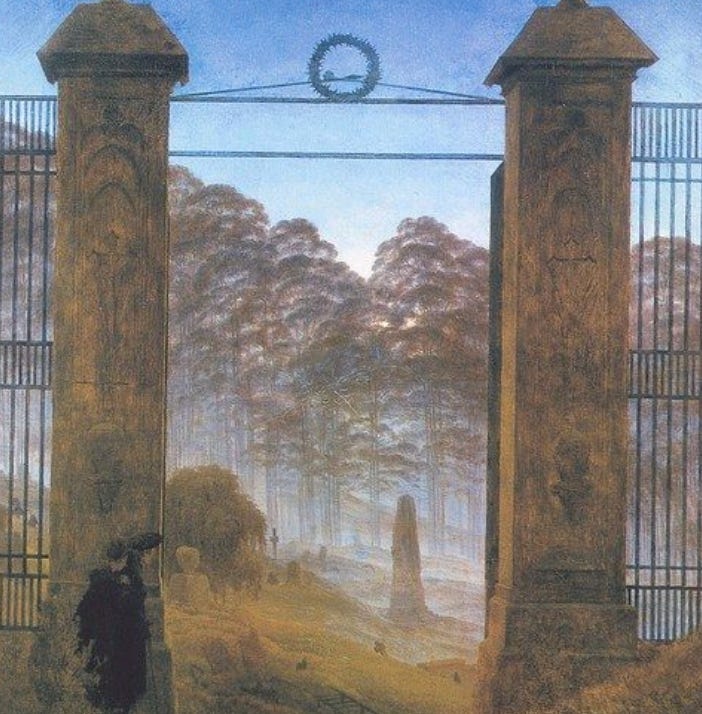
Pip spent the better part of his life trying to become something he thought he wanted. A gentleman. Embodying Estella’s true equal. A man worthy of the life he had designed in his head before he had ever truly lived one (or knew he truly wanted). From the moment fortune finds him in the marshes, he is no longer living his life: he is performing the one he imagined deserved to be his. He sheds his accent, his origins, Joe, his customs. He walks into rooms and measures himself against everyone in them, always expecting from others and himself. He loves Estella not quite as a person but as a confirmation that he had finally become enough. And Dickens, with the particular cruelty of someone who loves his characters deeply, gives him absolutely everything. The fortune, the clothes, the Temple address, the association with Jaggers. Dickens quietly begins to take it all apart: not as punishment, but as the greatest gift the novel has to offer.
Pip finds on the other side of all that wanting is not the version of himself he had polished and curated for years. It is the one he had been all along: the boy from the marshes, the one Joe never stopped caring for, the one who was enough before he ever decided he wasn't. The novel’s cruelest and most tender truth is that the things Pip tried hardest to control: Estella’s love, his own beginnings, what his life was supposed to mean, were precisely the ones that slipped through his hands the moment he gripped them tightest. What survives is what he didn’t manufacture, what he let come with no expectation. The loyalty he almost threw away. The goodness that was never contingent on his address or his accent or the size of his inheritance or how he presented himself after lessons with the pale young gentleman. The life that had been quietly, patiently waiting for him to stop auditioning for a different one.
I think about that often. How the life we try to blueprint into existence can crowd out the one that was already quietly growing underneath it. How when you hold something too tightly to make it exactly look the way you imagined, almost perfect, you drain it of the very thing that made you want it in the first place. We do this to everything we love, everything we experience. We do it with people; deciding who they are before they’ve had the chance to fully arrive, then feeling betrayed when they turn out to be more complicated or more interesting than the version we keep trying to mold them into. We do it with cities; landing somewhere with a fixed idea of what it should feel like, walking through it with a checklist of “needs tos and must haves”, constantly comparing it to the dream. We do it with our own lives: measuring them constantly against the plan we made at twenty-two, as if that version of us had access to information we still don’t have. As if control were the same as certainty.
Expectations are a double-edged knife we pick up the moment we decide that controlling the outcome of things is the same as being safe. How our friends will react. How our partners will love us. How our parents will show how proud they are of us. What each city means to us, what job we will get, where we will live, what we will look like. We layer so much expectation onto something that we strip it of its own nature before it ever gets the chance to breathe. It becomes a prison of trying to get the exact recipe of perfection that will remind us of how things are supposed to look or feel or take up space. We avoid the messiness because we equate it with failure, when it is precisely in that messiness that we find exactly what we were looking for.
Accepting things or people or experiences as they come; by loosening our grip on what they should be, we are finally able to enjoy them for what they are: without hollowing them out trying to make them into something else.
The floor of this apartment knows that. It has held me at my most certain and my most lost, and it has never once asked me to be different than I was in that moment. The New York life I didn’t live was not a failure: it was the first draft of a want that hadn’t yet learned what it was really asking for. It was a first taste of goodness that my life in Mexico City now promises. The Harvard application I never sent was not a door closed or one left un-knocked: it was the beginning of a question I hadn’t been brave enough to ask myself yet. What do I actually want, separate from what I thought would make me feel worthy of wanting it? Who am I, outside of the version I decided I needed to become to deserve the life I was seeking?
Those are not small questions. They are the ones that require you to sit on the floor of an empty apartment, with eighty-nine pounds of clothing inside duffle bags and three backpacks, and let the silence answer you honestly. And what I have found, every time I’ve been brave enough to stop expecting more than accepting, is that the life unfolding in front of me has always been richer than the one I had scripted. That the people who have changed me most were never the ones I expected. That the cities that have held me with the most warmth were not the ones I had planned. That the work that has meant the most has always arrived through a door I wasn’t constantly watching.
That is the quieter, harder practice underneath all of it. Not the setting of goals or the building of plans: those matter, they are not the enemy. It is the willingness to hold them loosely enough that life can move through them. To stop trying to control them and rather: move with them. The practice of arriving somewhere new and letting it be cold and strange and completely unlike what you imagined, and staying long enough to find out what it actually has to offer. The discipline of letting people exceed and disappoint and confuse you without immediately filing them into the folder titled “not what I imagined” you built for them before you knew them. The courage to let your own story take a turn you didn’t write.
Pip had to lose everything he thought he wanted before he could see what he always had. I had to sit on this floor, in this city, in this life that looks nothing like the one I mapped out before, and feel, with something I can only describe as profound relief, that I would not trade a single day in this life for the different version I once expected so badly to become.
As I now pack my bags once more to a new city, with vibrantly unique people and important plans and great love at my doorstep, I will keep that old raggedy book close to me. To remind me that even if sometimes I don’t get what I expect, I will always find what I need.
And that, it turns out, is a great expectation that never disappoints.
andre :)